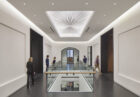
Loyola Marymount University – School of Film and Television Graduate Building
Los Angeles, California, United States
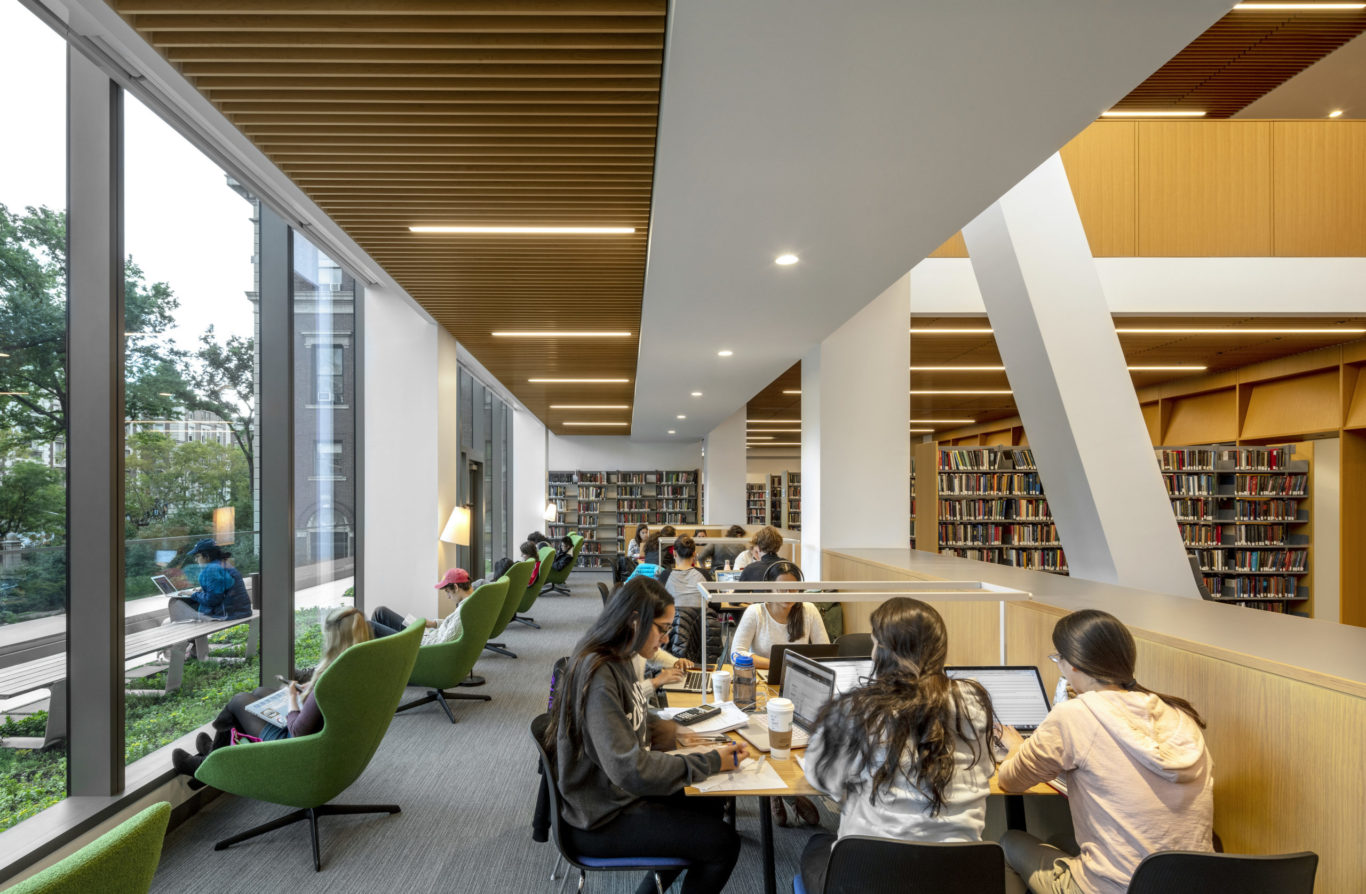
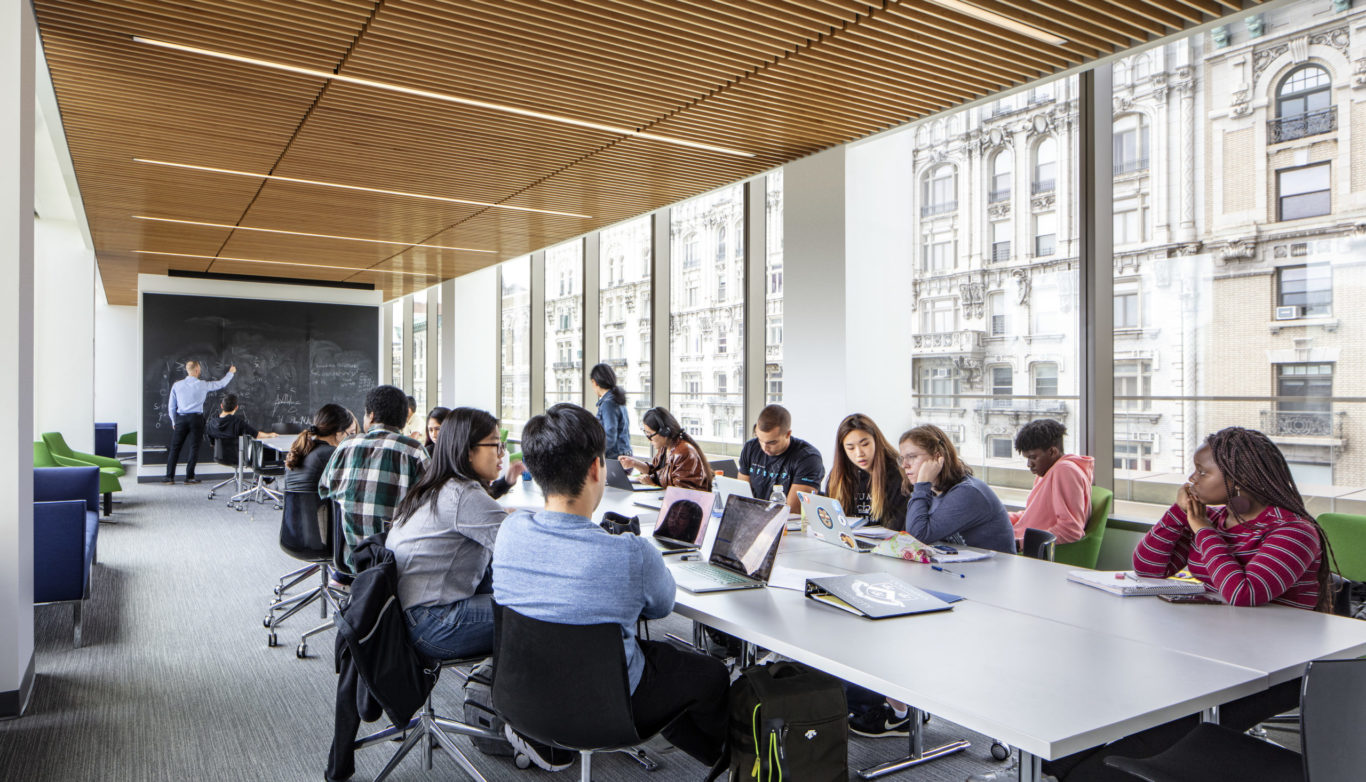
The Milstein Center represents a completely new kind of library—one that serves as the heart of the campus, bringing students together across disciplines and broadening the notion of the library as more than just a place for quiet, independent study.
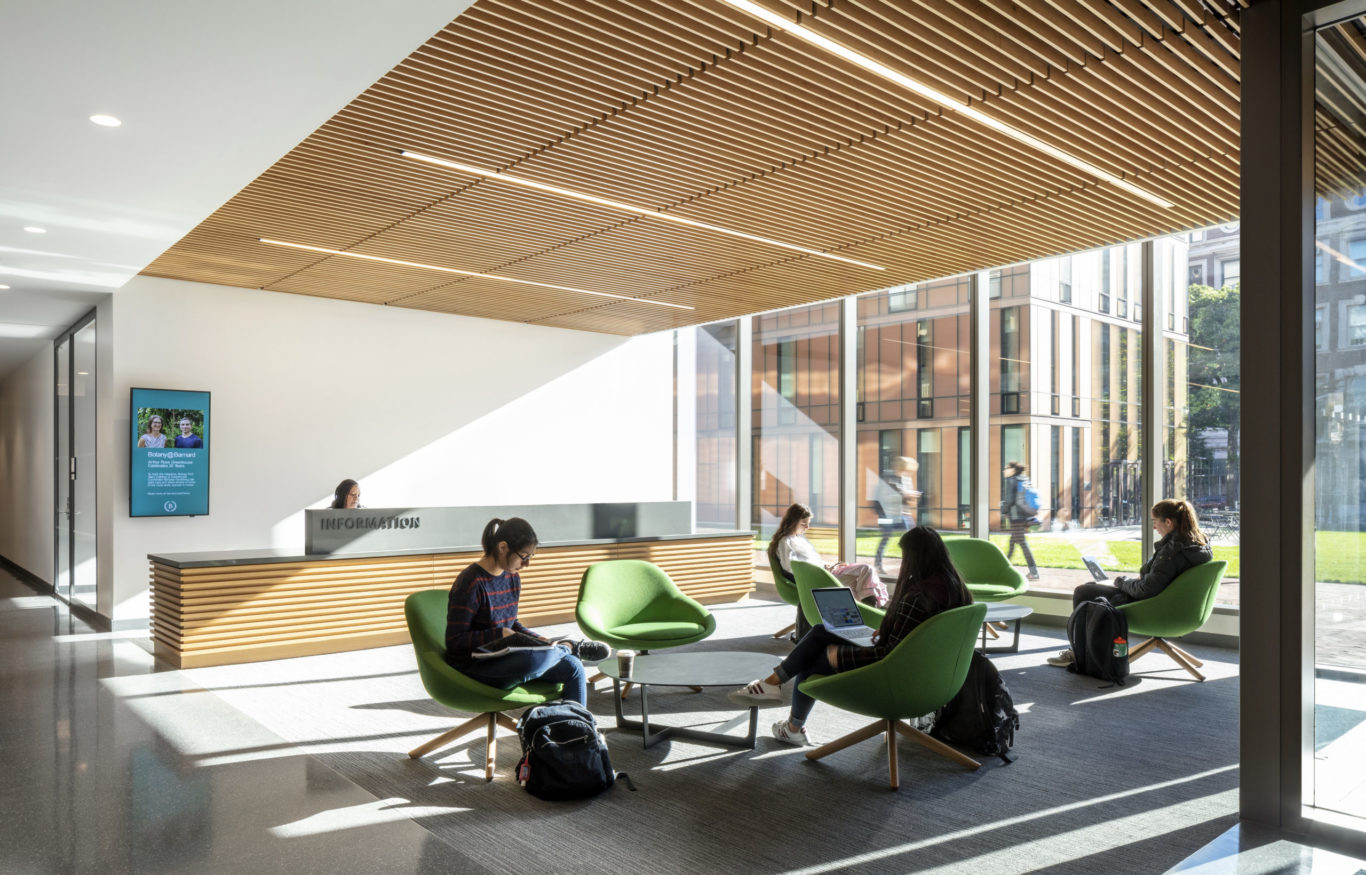
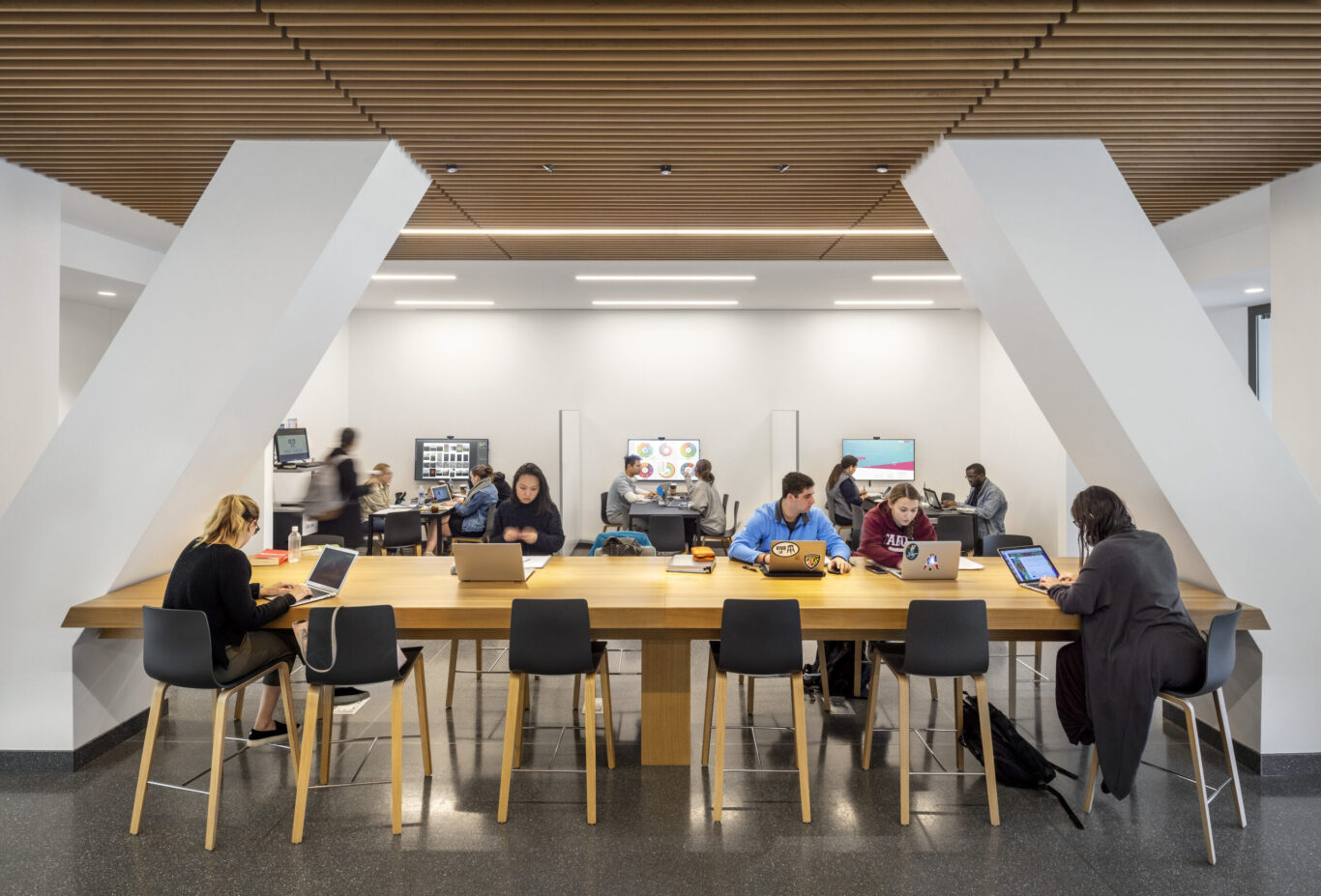
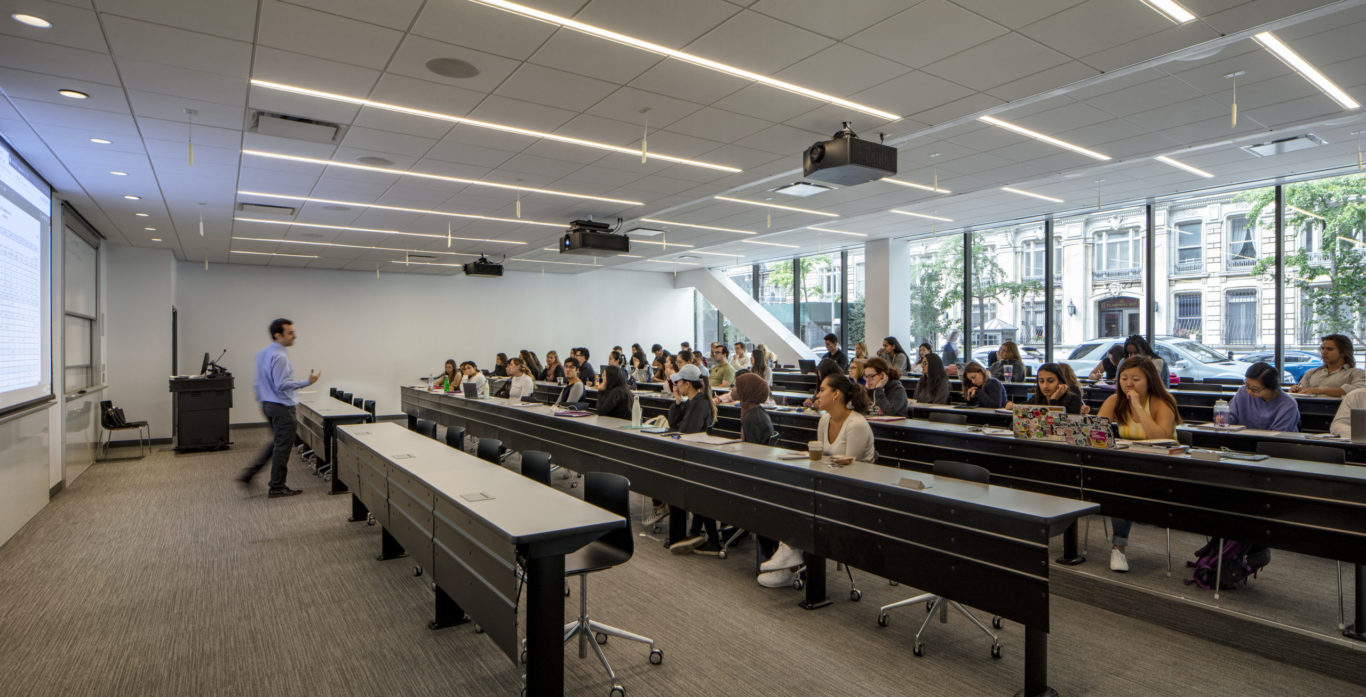
The Cheryl and Philip Milstein Center for Teaching Learning puts forth a very different idea for the programming that a library can offer. It is a 21st-century vision: interdisciplinary workspaces for groups both large and small; co-location of faculty in economics, mathematics, history, and other liberal arts disciplines; new homes for the Athena Center for Leadership Studies and the Barnard Center for Research on Women; and a brand new technological suite of multimedia centers called the Digital Commons. Replacing the former Lehman Library at the center of campus, the building is the new hub of academic and intellectual life at Barnard College.
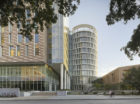
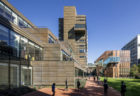
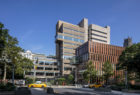
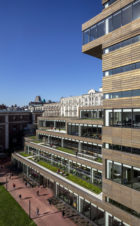
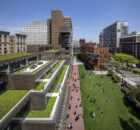
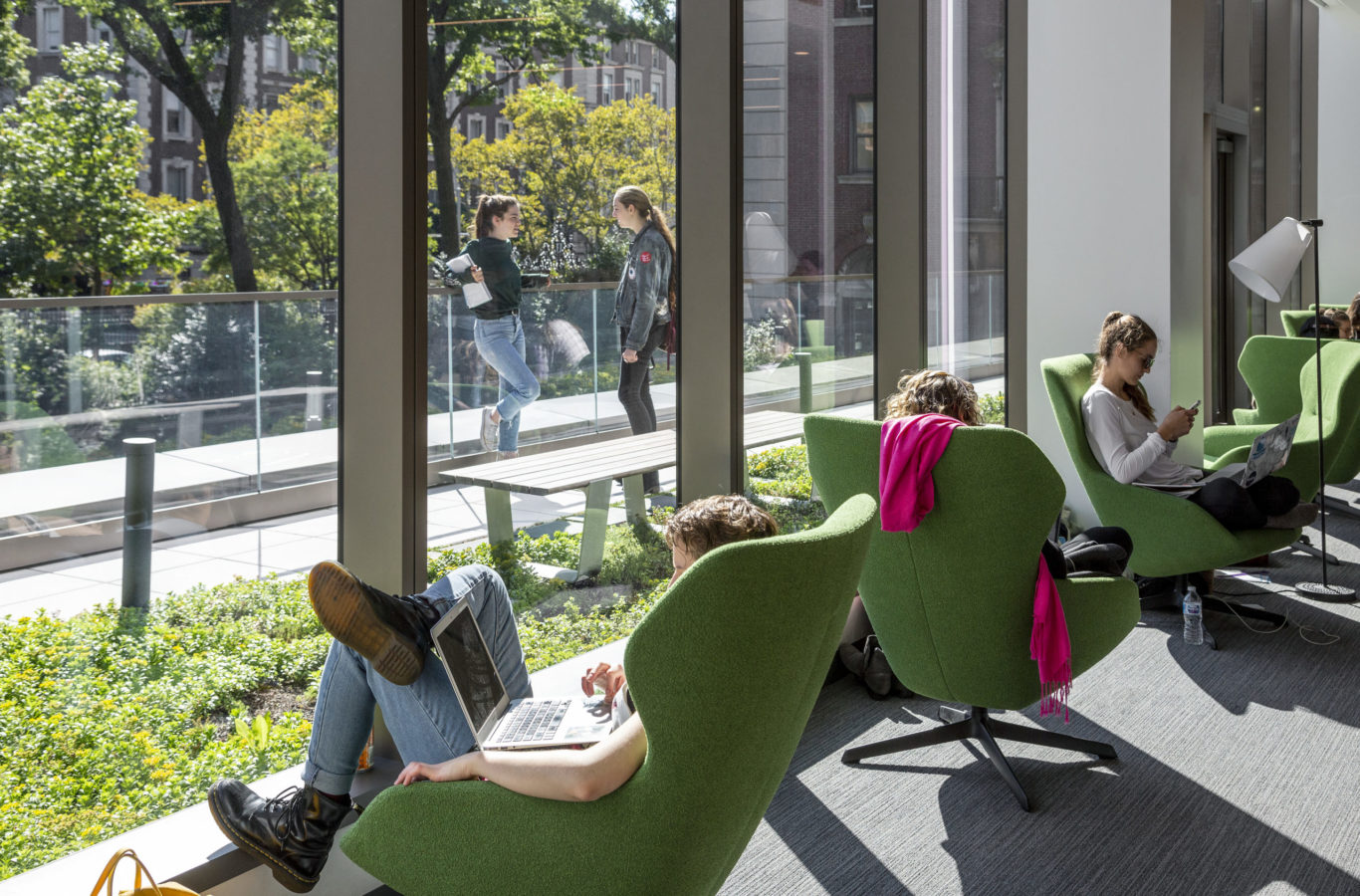
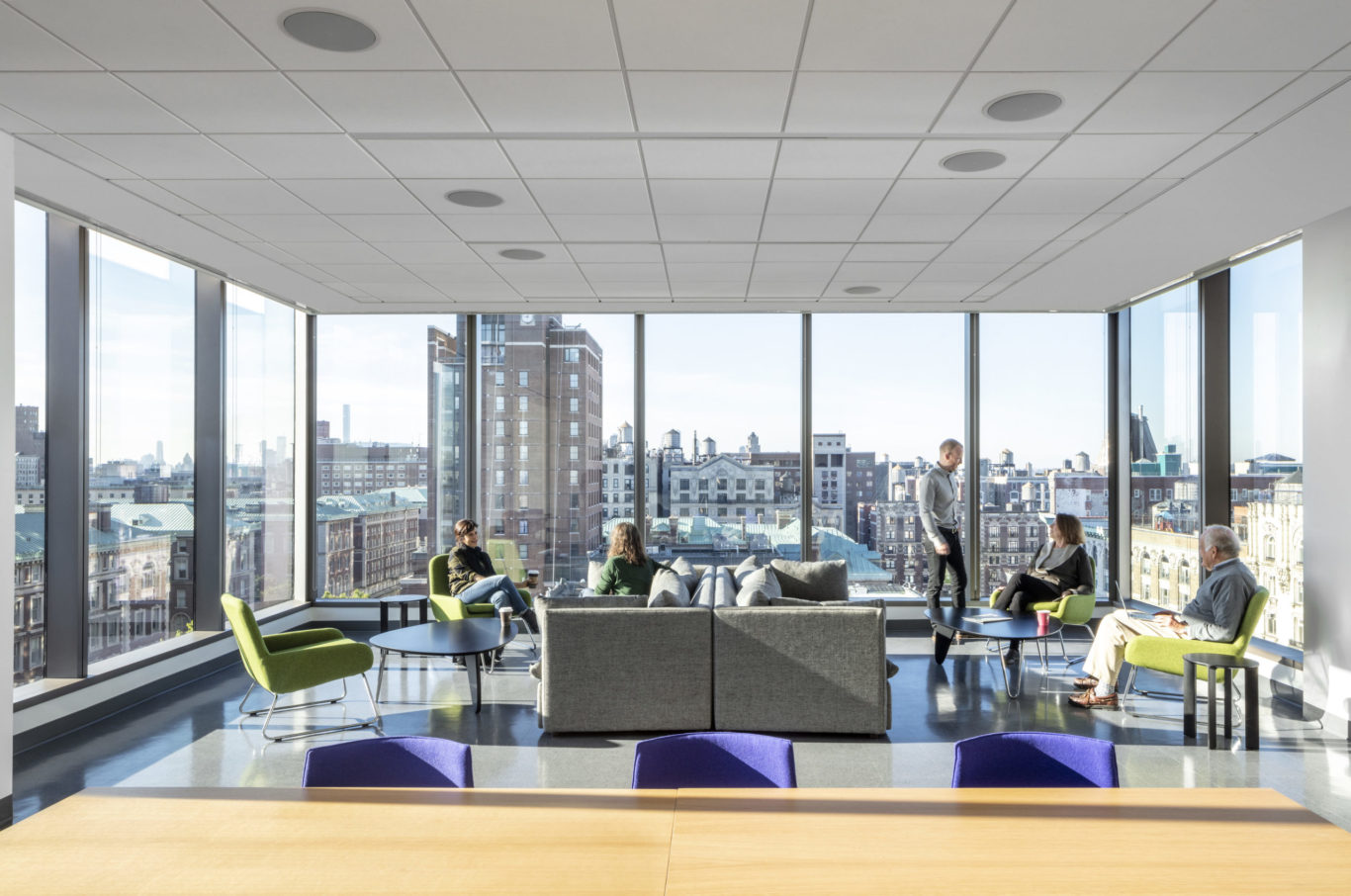
Configuring the building’s massing in a way that would enhance the campus was one of the greatest challenges to resolve. While doubling the size of the previous building, the new library had to allow more sunlight to reach Lehman Lawn—the campus’ signature open space—than ever before. SOM designed the first five floors to rise in a series of terraces that create entirely new green spaces for the urban campus, with the top six floors designed as a narrow tower that corresponds to the scale of nearby buildings. At the fifth level, a skybridge connects to the adjacent Altschul Hall, and near the top, a cantilevered volume contains a faculty lounge with panoramic views that take in the Hudson River, the Columbia University campus, and Midtown Manhattan.
Much like the massing, the material selections are sensitive to the campus context in Morningside Heights. The facade uses a rain screen system of patinated zinc panels. With a soft reflectivity and warmth, the zinc harmonizes with the surrounding brick, stone, and concrete buildings. At the same time, the metal facade expresses a contemporary aesthetic that distinguishes The Milstein Center as a building of its time.
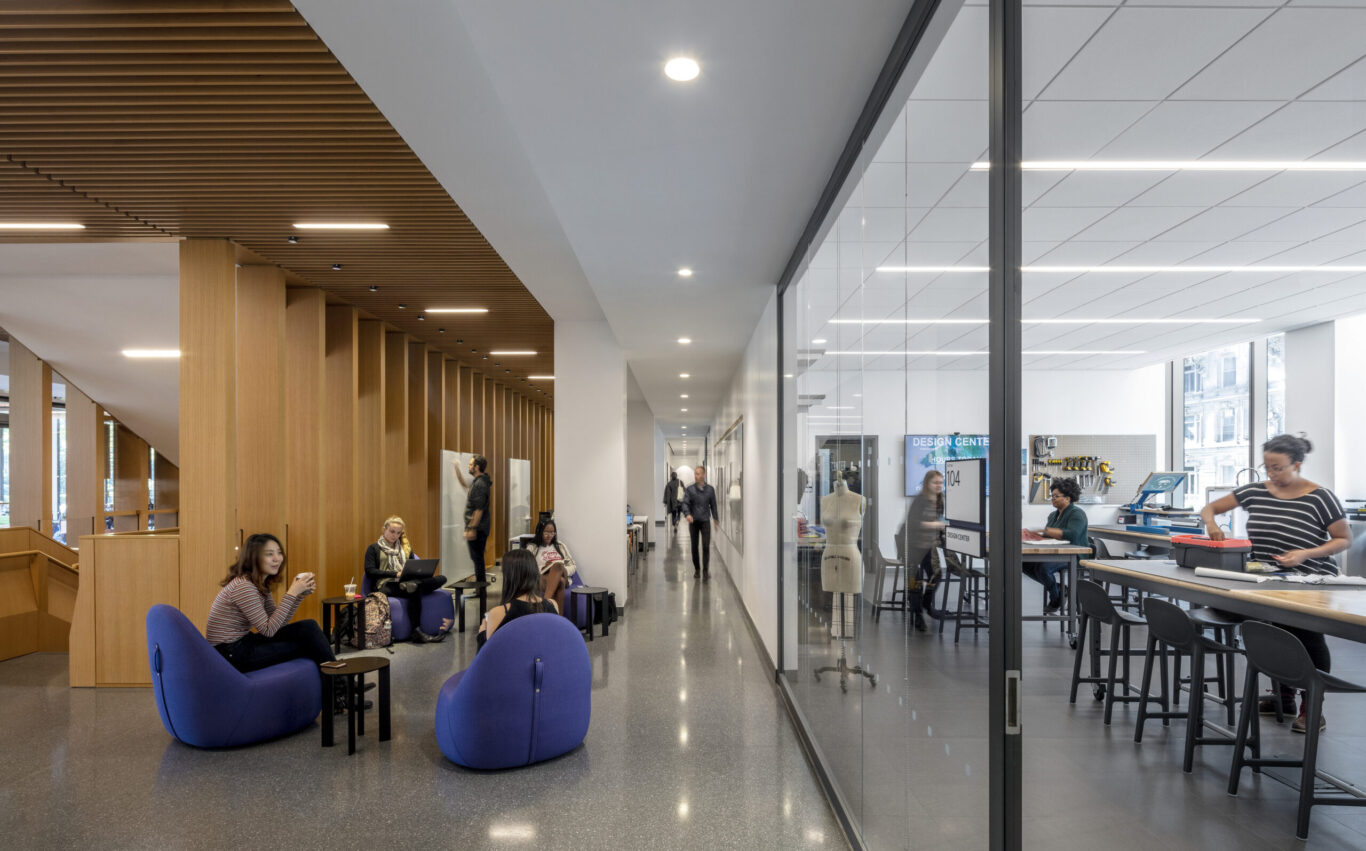
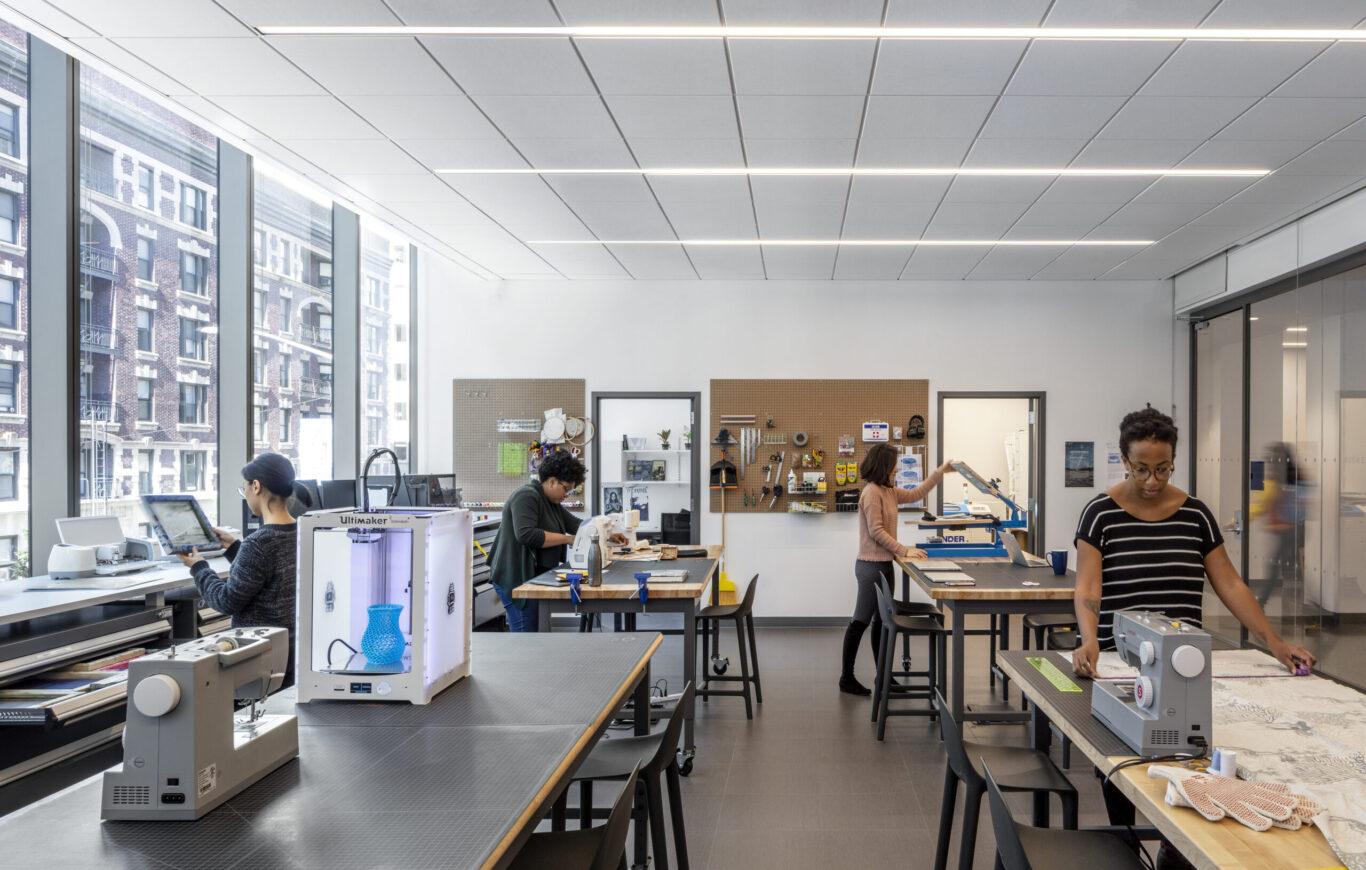
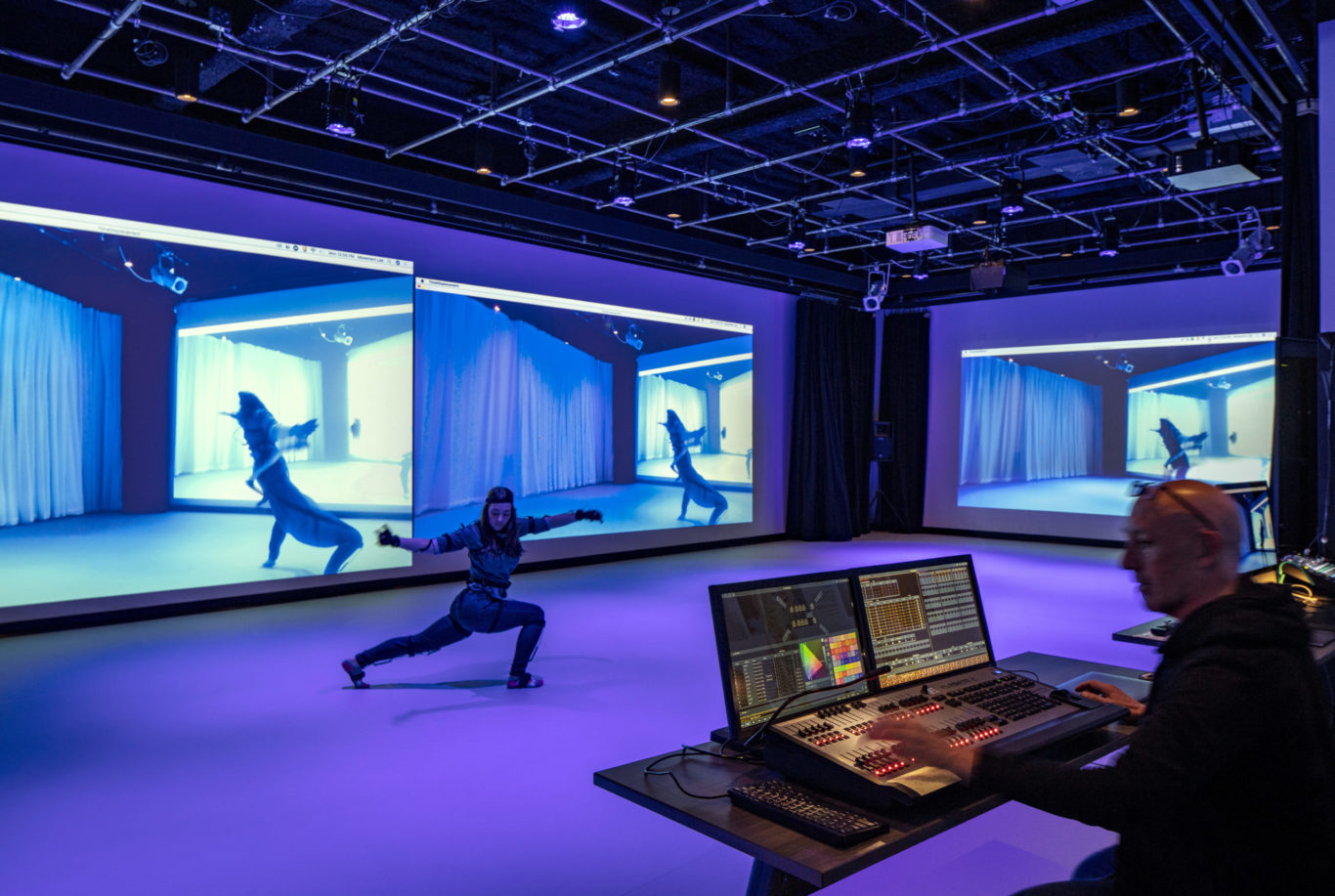
The Digital Commons transforms Barnard College’s technological capabilities. It is a place where students and faculty across disciplines can come together to work collaboratively to discover and create new ideas. The Movement Lab in the lower level, for example, brings together dance, computer science, and physics. One floor up, the Design Center features makerspaces for 3D printing, metalwork, and more. With spaces featuring tools for computational science, media, and other types of technology, the Digital Commons reimagines the possibilities for researching and learning at a campus library.
The Milstein Center is certified LEED Silver. The building is designed to save energy costs by 15 percent below ASHRAE 90.1 2007 standards, as well as 33 percent in water savings—half of which is reused for landscape irrigation. Natural light, programmed lighting scenes, and individual controls enhance learning environments while contributing to energy savings.
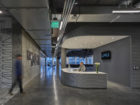
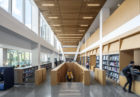
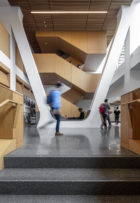
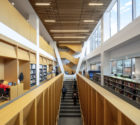
Barnard’s commitment to sustainability extends even further, with a focus on health and wellness. The daylighting and green terraces, for instance, contribute to both of these goals. Gracious interior pathways connect each program, and a series of communicating stairs weave through the building—bringing students and faculty to every space and experience in the building’s academic podium, and creating opportunities for chance encounters to reinforce a sense of community.
Los Angeles, California, United States
Philadelphia, Pennsylvania, United States
Cambridge, Massachusetts, United States
01/